Surf Etiquette with Foil Drive
Guides
November 7, 2024 Marketing Foil Drive

Surf Etiquette with Foil Drive

Whilst Foil Drive might eliminate the difficulty of getting on foil, it certainly does not eliminate your obligation to follow surf etiquette. If anything, you will need to practice this more so than before. Remember technology advancements are not the problem, how it’s used can cause people to become upset.  

Foil Drive Podcast | Ep 16 | Foil Drive Etiquette with Co-Founder Paul Martin
Guides Podcasts
October 22, 2024 Marketing Foil Drive

Foil Drive Podcast | Ep 16 | Foil Drive Etiquette with Co-Founder Paul Martin

As the popularity of foil driving and foil assist technologies grow, it's essential for users to understand their responsibility and etiquette when sharing the water with others. In a recent podcast discussion, Paul Martin, the inventor of Foil Drive, shared his insights on how foil drivers can navigate this growing trend responsibly. The Role of Responsibility in Foil Drive Paul highlighted a key point: as pioneers of Foil Drive, there's an inherent responsibility to establish the right standards. Whether you’re the first to introduce a new sport or technology, the burden falls on the early adopters to create a respectful and harmonious environment for everyone. Paul emphasised that responsibility doesn’t necessarily mean strict rules, but rather fostering community-driven standards. This involves understanding your position in the water and being considerate of others. Sharing the Ocean: Do Foil Drivers Have Priority? One of the primary concerns addressed in the conversation is how foil drivers should interact with other ocean users. Paul pointed out that while technology may give foil drivers an advantage in terms of catching waves, it doesn't automatically grant them the right to overtake or inconvenience other surfers or swimmers. A sense of self-regulation is vital. Foil drivers should aim to catch waves without disrupting others and recognise that swimmers, like pedestrians at a crosswalk, should always have the right of way. The key takeaway here is that foil drivers must exercise common sense. If you're able to catch waves that others can’t, great. But that doesn’t mean you should dominate the lineup. Striking a balance between maximising your experience and allowing others to enjoy theirs is critical. Addressing Concerns: Noise Pollution and Group Etiquette Another issue raised was the noise generated by Foil Drive motors, particularly when used by less experienced riders. In a quiet beach environment, the sound of multiple Foil Drives can be off-putting, especially if the motors are constantly breaching the surface. Paul explained that this is often a result of users not fully understanding how to operate the motor efficiently. By keeping the pod submerged and using minimal throttle, riders can reduce noise and enjoy a smoother, quieter ride. Group dynamics also come into play, particularly when multiple foil drivers are in the water together. While it's undoubtedly fun to foil with friends, large groups can become a spectacle and may unintentionally disrupt the vibe of the beach or surf spot. The same way that snowboarders might carve down a hill together, foil drivers often want to show off their skills. However, it's essential to remember that this can be intimidating or annoying to other water users. Paul recommends spacing out and choosing less crowded spots to avoid these conflicts. Communication: The Key to Peaceful Coexistence One of the most valuable tips shared in the discussion was the importance of communication. A simple “hello” or a quick explanation to a surfer about how foil driving works can go a long way in easing tensions. Many surfers or swimmers may not fully understand what you're doing, which can lead to misunderstandings. By being approachable and offering to share the experience, such as giving someone a tow or explaining how the technology works, you can foster a sense of camaraderie rather than competition. Final Thoughts: Embrace the Responsibility At the end of the day, foil driving is a fun and exhilarating way to enjoy the water. But with that fun comes responsibility. As Paul aptly noted, technology evolves, and Foil Drive is just one step in the continuous development of water sports. It’s up to early adopters and regular users to lead by example, ensuring that foil driving can coexist peacefully with other ocean activities.  Whether you're a seasoned foil driver or a newcomer to the sport, remember to stay respectful, communicate clearly, and enjoy the waves responsibly. Watch the Full Episode  

image

Looking for the help centre?

Everything from purchasing and shipping to setup, troubleshooting, and support.

Click Here
Learning to Pump a Foil | No Dock or Boat Required
Guides
August 16, 2024 Marketing Foil Drive

Learning to Pump a Foil | No Dock or Boat Required

  In this Masterclass, Dom delves into the technique of flat water pump practice. One of the standout advantages of using Foil Drive is its versatility; you don't need a dock, ladder, or boat to start practicing flat water pump foiling. With Foil Drive, you can begin from virtually anywhere on the water and get up onto the foil effortlessly. We recommend watching this Masterclass to get the most out of it! Scroll to the bottom to watch. The process is straightforward. Start by performing an Ollie to get high on the mast, and then pump to your heart's content. Here are the four key stages of this technique: Flat Water Takeoff: For a detailed explanation, refer to Dom's Takeoff Technique video on taking off from a small print board. This video outlines the technique thoroughly. eFoiling in Assist Position: Position the motor high on the mast for better control. The Ollie: This manoeuvre helps you transition to pumping. Transitioning from Pumping Back to eFoiling: Mastering this transition is crucial for a seamless experience. This isn't focused on pump technique itself but rather on demonstrating the potential of Foil Drive to aid in practicing pumping. I'll show you how to transition from foiling to pumping and back again. Starting with the Ollie The Ollie is essentially a large pump. Crouch down by bending your knees, then jump up while applying significant back foot pressure. This back foot pressure is crucial for gaining height on the mast. At the peak of your jump, bring your knees up to your chest to prolong your time aloft before resuming pumping. When transitioning to foiling, remember to push down with your front foot to counteract the lift from the motor. Pitch Control in Assist Mode When the motor is high on the mast in the Assist motor position, maintaining pitch control is vital due to the short distance between the motor and the board. You'll need to keep the motor in the water without the board touching and creating drag. This technique improves with practice and significantly enhances your pitch control skills. Extending your run as much as possible and then smoothly transitioning back to foiling is a satisfying and practical aspect of using Foil Drive. Benefits of Foil Drive for Pumping Gaining fitness skill is another advantage to Foil Drive. You'll be on the foil for extended periods, alternating between pumping and foiling. Wake thieving is also simplified. You can easily transition from foiling to riding a wave and back again without falling off and paddling back. Foil Drive offers a versatile and efficient way to practice flat water pumping.  Happy foiling! If you want to learn more about Foil Drive, visit our help centre. Watch the full Masterclass

How To Improve Controller Signal Connectivity
Guides
August 15, 2024 Marketing Foil Drive

How To Improve Controller Signal Connectivity

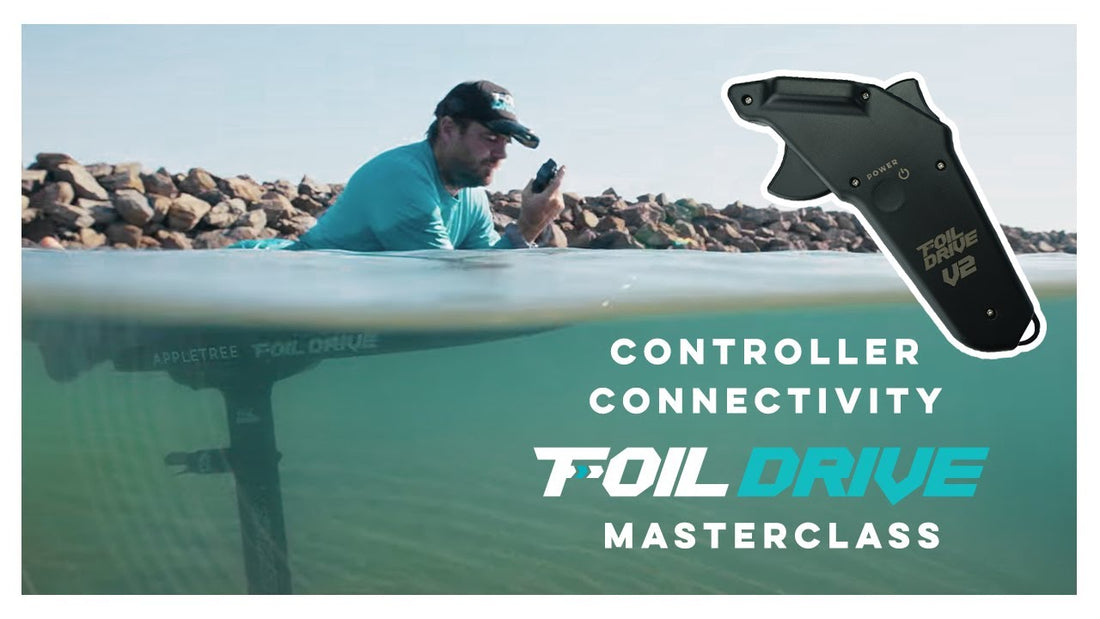
  The majority of "Connectivity Issues" can be improved by simply understanding how the controller and the electronics talk to each other. Paul takes you through different board constructions and volumes, and different techniques you can try to improve your connectivity. We recommend watching this Masterclass to get the most out of it! Scroll to the bottom to watch. The Importance of Board Selection In this Masterclass, Paul demonstrates take-off with a variety of boards, each with its own pros and cons. Choosing the right board is crucial as it directly affects the signal reception of your controller. Here’s a quick rundown of the boards we’ll be discussing: Foil Drive Inspired Axis: This board was designed to have excellent signal despite being full carbon, and has long plastic tracks. It's 60L,  5'4" x 19.5". Starboard Blue Carbon Series: A bit more challenging with signal but fantastic when used correctly. It's 5'2 x 50 litres. Unifoil Quiver Killer: Known for its versatility, this board is 5'2" x 19" and 45 litres, also carbon fibre with plastic tracks. Appletree: A smaller full carbon board at 4'6 and 35 litres, which can sink under body weight if not handled properly. Takuma Rising Sun: This 4'2 x 18.5" 30-litre board has full carbon tracks, making it previously challenging for signal but now usable with the Foil Drive external patch antenna. Understanding Board and Controller Interaction Not all carbon boards are created equal. The differences in carbon usage, box materials, and track materials can significantly affect signal reception. For instance, a carbon board with plastic tracks behaves differently from one with carbon tracks. Understanding these nuances helps in optimizing your setup for better performance. Practical Tips for Controller Use Controller Placement and Signal Maintenance When using a full carbon board like the Appletree, you need to pay attention to controller placement. Keep the Controller Close: Place the controller on the surface of the board to maintain a strong signal. This works both above and below the water. Avoid Mashing the Throttle: The controller needs to see the signal for at least one second to link. If you lose the link, stop, wait for a second, then pull the throttle again. Signal in Water: If the board is submerged, it’s crucial to bring the nose out of the water to regain the link. Paddle quickly to maintain the signal. Getting Up on Foil Body Position: Keep your body over the nose of the board to maintain it flat. This helps the wing build speed and generate lift. Throttle Management: Don’t go full throttle immediately. Gradually increase the throttle as you build speed. Engage the boost only once you're moving to avoid too much lift. Paddling Technique: Use a double overhand paddle to get a smaller board up on the plane. Ensure the board’s nose is out of the water before transitioning to paddling. Troubleshooting Common Issues Signal Loss: If you lose signal, it’s often because the controller is too far from the board. Press the controller against the surface of the board to re-establish the connection. Board Submersion: Fully submerged boards will lose the signal. Always try to get part of the board out of the water before throttling up. Throttle Control: Avoid keeping the throttle pressed when out of the water. Release it, wait for a second, then engage it again to prevent sudden take-offs. Advanced Tips Boost Engagement: Only engage the boost once you have sufficient speed to avoid abrupt lifts. Transitioning: When transitioning from speed to foil, subtle movements are key. Don’t make aggressive manoeuvres.  Conclusion Understanding and optimising the connection between your controller and board can significantly enhance your Foil Drive experience. By paying attention to the details of your equipment and practicing the techniques discussed, you can achieve smoother and more efficient rides. Happy foiling! If you want to learn more about Foil Drive, visit our help centre. Watch the full Masterclass

Low Volume Prone Board Takeoff Foil Assist Technique
Guides
August 7, 2024 Marketing Foil Drive

Low Volume Prone Board Takeoff Foil Assist Technique

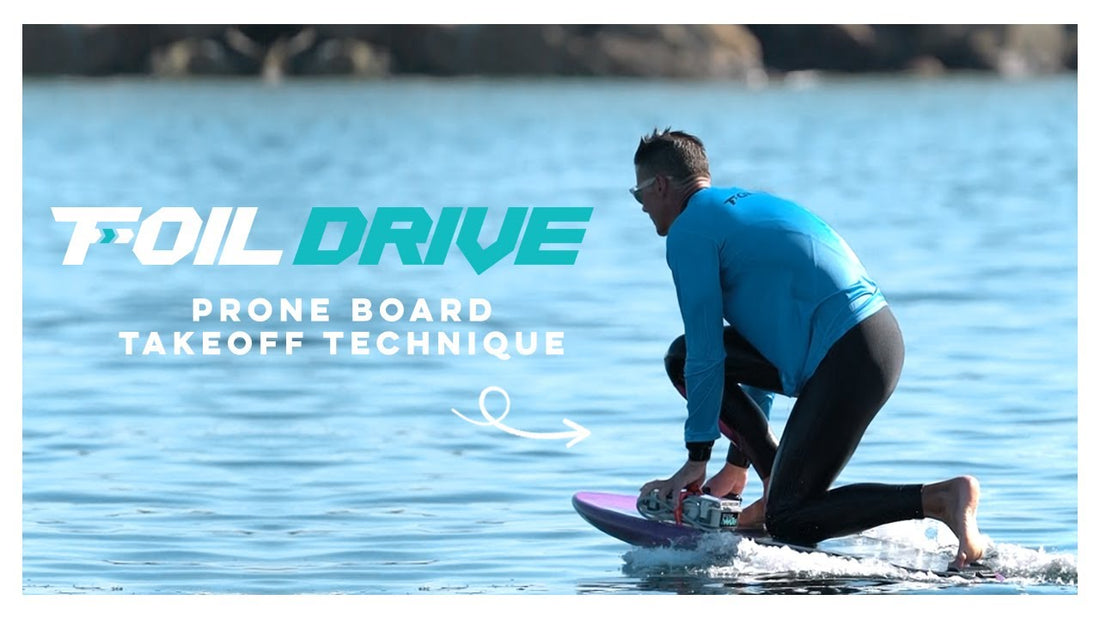
The size and volume of your board and foil significantly impact your ability to get on foil with your Foil Drive system, however, it is possible - with the right gear! Watch this Masterclass video as Dom teaches you techniques to assist with getting to your feet on a low volume board, as well as things to avoid! 

How to Overcome the 'Bucking Bronco'
Guides
August 7, 2024 Marketing Foil Drive

How to Overcome the 'Bucking Bronco'

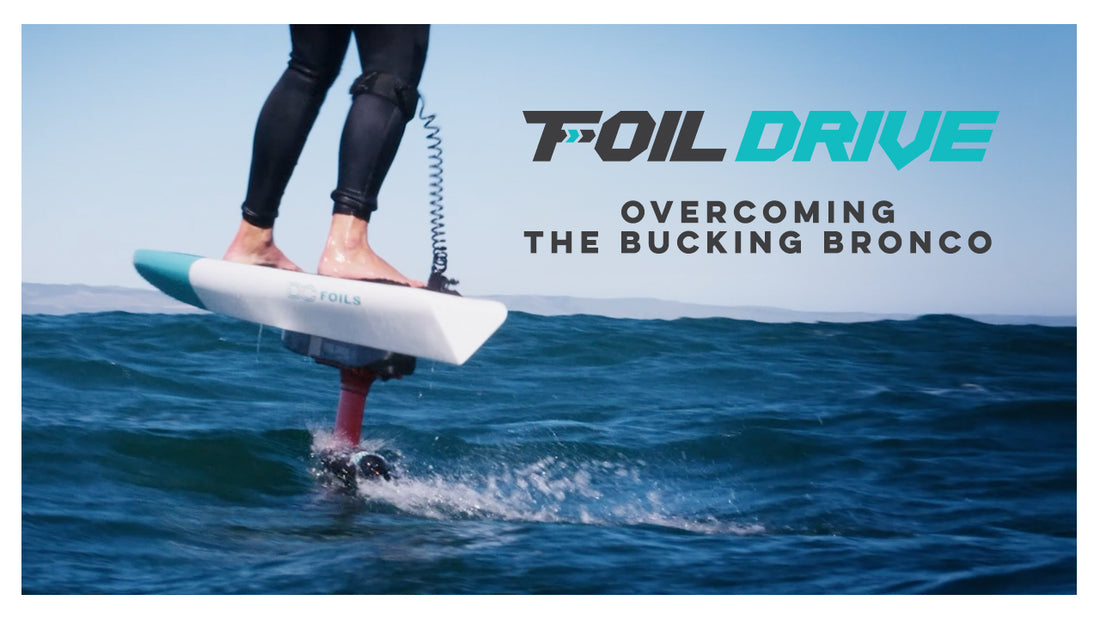
Riding the Gen2 Foil Drive can be an exhilarating experience, but for beginners, it's not uncommon to encounter the challenge known as the 'Bucking Bronco.' In this blog post, we'll delve into the art of avoiding the 'Bucking Bronco' and share tips on how to achieve a smooth and enjoyable ride.

Transitioning from Motor to Free-Foil
Guides
August 7, 2024 Marketing Foil Drive

Transitioning from Motor to Free-Foil

  Transitioning from motoring to gliding with Foil Drive on your foil board can be tricky, but with the right approach, it can be smooth and effortless. Here are some essential tips to help you perfect this transition and enhance your overall riding experience. Less is More One common mistake riders make is trying to do too much too fast. They often force the board up, which is unnecessary. Instead, you should focus on doing less. Build up your speed and lead in to a small pop-up. That's all it takes! Avoid an aggressive kick or pushing the board hard. With enough velocity and lift, simply get on one of the small bumps in the water, pop up then pop down. Don't Force It When you attempt a big kick or an aggressive manoeuvre, you risk unsettling the wing, the board, and yourself. This can lead to instability and a less enjoyable ride. It's all about maintaining control through subtle movements rather than forceful actions. Pre-Spooling Your Propeller When you’re in powered flight and your motor is out of the water, you have two main options: pre-engage the propeller out of the water and then drop it in, or start it in the water. Avoid starting the propeller when it's halfway in and halfway out of the water, as this can cause vibration issues. Here's how to do it right: Pre-spooling: As you're gliding, pre-spool your propeller and then drop the motor back in. This technique helps you transition back into forward momentum smoothly, maintaining your speed. Starting in the water: This approach tends to slow you down more as you hit the water hard and need to build up speed again. While it’s a viable option, it requires more effort to regain momentum. Handling Stalls If you find yourself slowing down to the point of stalling, it’s better to give up gracefully than to try overpowering the stall. Avoid slamming the throttle in an attempt to force your way out, as this can pinch the board and make recovery more difficult. It can also be dangerous, potentially causing you to fall onto the board. Instead, simply jump off and restart. This approach is safer and more effective. Conclusion Mastering the transition from motoring to gliding is all about subtlety and control. By doing less, pre-spooling your propeller, and knowing when to give up gracefully, you can ensure a smoother, safer, and more enjoyable Foildriving experience. Happy riding! If you want to learn more about Foil Drive, visit our help centre. Watch the Full Masterclass  

Foil Assist Surfing Tips
Guides
June 21, 2024 Marketing Foil Drive

Foil Assist Surfing Tips

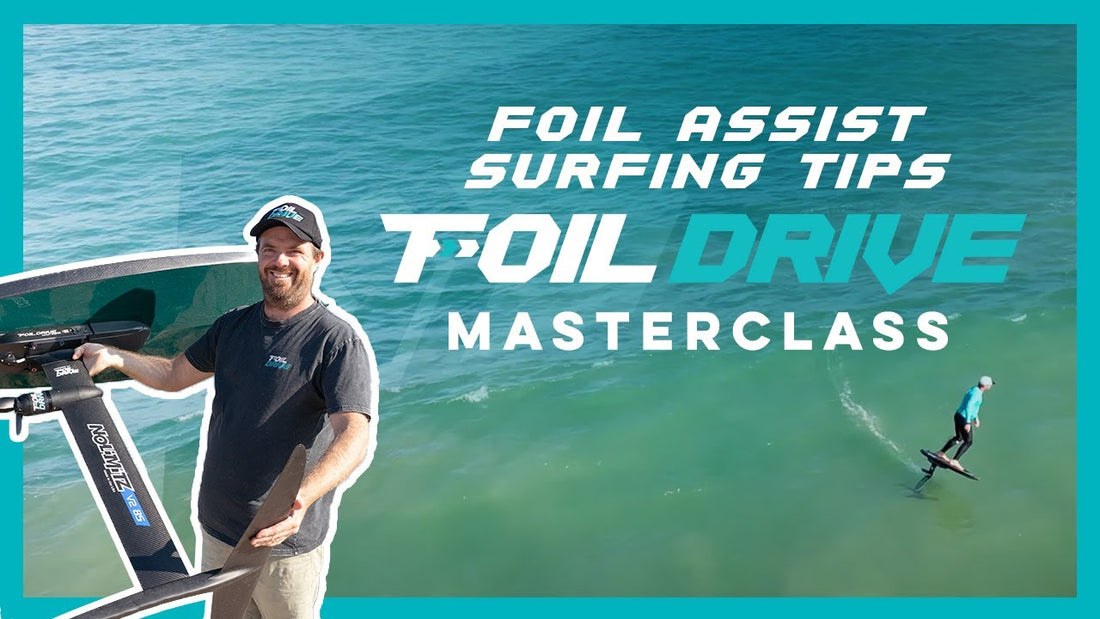
  Foil surfing is an amazing sport that combines the thrill of surfing with the unique sensation of flying above the water. This masterclass provides essential tips and techniques to help you master foil surfing and Foil Drive, from preparing your gear to advanced manoeuvres.We recommend watching this Masterclass to get the most out of it! Scroll to the bottom to watch Preparing Your Gear Having the right equipment is crucial for a successful foil surfing experience. Here’s what you need to check before heading out: Board and Foil Selection We all want to rider smaller foils and smaller boards. We recommend going a foil size larger than you'd expect to give yourself the best change and progressing faster and nailing these techniques.  Foil Drive Gen2 If you're learning, a larger battery selection will help, if not, a backup on the beach! Pre-session Check: Ensure all bolts are tightened, tracks have foam in them, Foil Drive propeller bolts are secure, battery grease is applied, and the nose cone is latched properly.  Properly preparing your gear ensures a smooth and enjoyable session on the water. Getting Out to the Waves Navigating out to the surf can be challenging. Here’s how to do it effectively: Carry the Board: Hold the fuselage and one wing tip for better control. Angle the Board: Keep the board at a slight angle to help it pop over incoming waves. Throttle Activation: The controller MUST be OFF when getting in and out of the water. Do not turn the controller on until you are in deep water and are on the board.  Location Make sure you are NOT entering a busy line-up, with Foil Drive, you simply don't need to be near a line-up at all. Find somewhere isolated, away from the crowd.  These steps will help you reach the waves efficiently and safely. Taking Off Achieving a successful takeoff is essential for a good ride. Use the "J Turn" technique - Displayed in the video: Mimic Wave Catching: Pretend to catch a wave and then turn off at the last second in the shape of  a J  Wave Rush: Allow the wave to rush over your wing, providing extra lift. Propeller Re-Entry: When you need to engage the motor again, either start the motor spinning before re-entry, or wait until the propellers are fully submerged. Engaging with the propellers half in and half out can cause unbalanced strain on your bolts as the propellers open/close. This manoeuvre is particularly useful for heavier riders or those using smaller wings, helping you get on plane quickly. Riding the Waves To ride the waves effectively: Choose Smooth Sections: Avoid breaking waves, which can be too aggressive. Throttle Control: Engage the motor slightly before peeling off the wave for a smooth transition. Steady Throttle: Maintain the throttle at about 60-65% for a controlled and enjoyable ride. Focusing on these aspects ensures a smoother and more enjoyable foil surfing experience. Manoeuvring and Control Mastering foil surfing requires smooth and subtle movements: Avoid Aggressive Turns: They can disrupt balance and control. Gradual Speed Increase: Build speed gradually to maintain a steady ride. Absorb Wave Energy: Use your knees to stay balanced and prevent the board from aerating too much. These techniques help in maintaining control and stability. Safety and Courtesy Being mindful of others and ensuring safety is paramount: Avoid unnecessary Propeller Noise: Keep the propeller submerged to avoid noise and ensure safety. try not to motor along the surface with the propeller exiting and entering the water all the time. Gradual Peel Off: When peeling off from a wave, do it gradually to prevent aggressive impacts. Respecting these guidelines ensures a safer environment for everyone in the water. Advanced Techniques For those looking to advance their skills, here are some tips: Prone Takeoffs: Paddle with the controller in your hand, lean into the board, and apply full power before paddling. Throttle Adjustment: If predominantly prone surfing, reduce throttle to avoid overpowering the board. These advanced techniques help in refining your skills and improving overall performance. Final Tips Here are some final tips to keep in mind: Avoid Low Riding: Prevent dragging the pod by not riding too low. Be confident in your mast height and pop up that little bit higher! Maintain Throttle: Keep a slight throttle during turns to retain speed and control. Foil surfing is all about enjoying the ride and having fun.Take your time to feel your limits and ease into the sport. Every session is an opportunity to learn and improve. Stay safe, respect the ocean, and have a blast out there! Happy foiling! Watch the full Masterclass  

Choosing a Board for your Gen2 Foil Drive Set Up
Guides
December 7, 2023 Marketing Foil Drive

Choosing a Board for your Gen2 Foil Drive Set Up

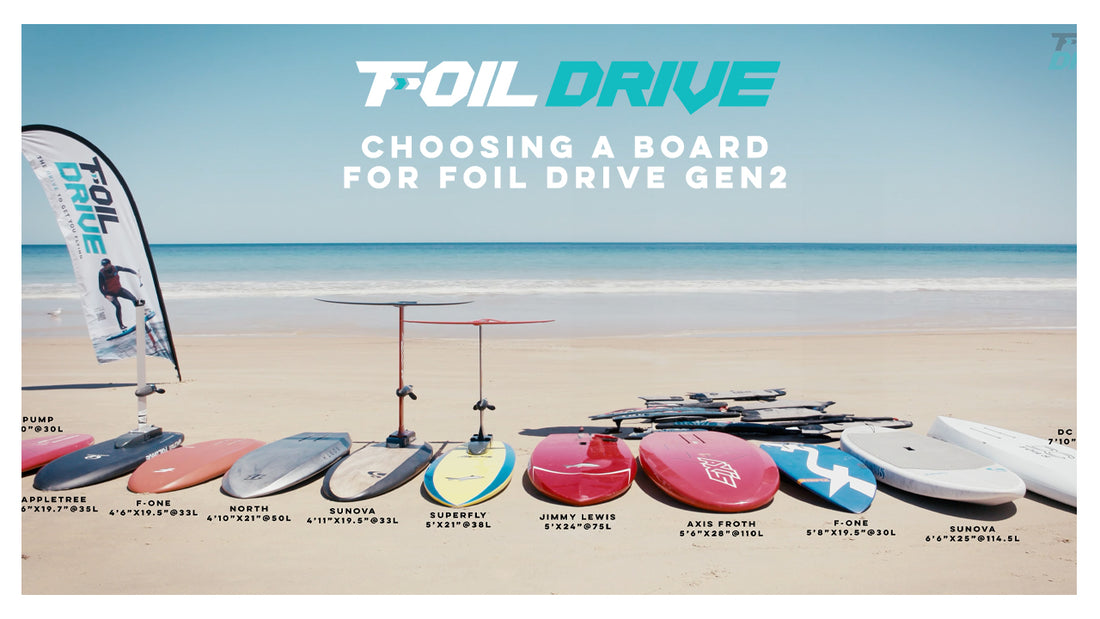
Paul and Jamie are stoked to share their wealth of knowledge on choosing the perfect board for your Gen2 Foil Drive setup. After two and a half years and thousands of boards sent worldwide, they've learned a thing or two about what works best. So, sit back and have a read through the intricacies of selecting the ideal board for your foiling adventures.

Foiling Etiquette with Foil Drive
Guides
March 28, 2022 Foil Drive

Foiling Etiquette with Foil Drive

Surf Etiquette has been respected and acknowledged for many years and is incredibly important. As hydrofoiling continues to grow across the world, this etiquette is evolving to include guidelines for both traditional hydrofoils and efoils like Foil Drive™.There is already so much discussion around foils, where they fit and the overall safety in the line up. With good practice and strong role modelling, we're all in a position to educate our peers and display etiquette, to ensure life long enjoyment and growth of such an incredible sport. As a company producing these devices, we have the responsibility to aid our community with the right tools to not only enjoy their time safely, but to be considerate of others, their environment and their gear. Like any sport, rules and etiquette are constantly developing, so please add anything we may miss in the comments below! BASIC WATERMAN ETIQUETTE Let's start off with the basics, some things to consider for surfers and foilers alike.1. When you're learning, stay away from others2. ALWAYS wear a leg rope. We'll cover the only circumstance when we recommend not to in the Learners Etiquette below.3. Right of Way - The person closest to the peak of the wave always gets priority.4. Don't Drop In - If someone is going for a wave, or already on it, don't drop in, there will be another!5. Don't Snake - Snaking is when someone paddles inside of another surfer in order to steal priority and take off closest to the peak.6. Paddle back on the outside - Always paddle back to the line-up of the outside, don't cruise back through the guys where people are surfing.7. Communicate - Have a chat, encourage and apologise if necessary! Everyone's out there to have fun!8. Keep it clean - NEVER litter, it's as simple as that. To take it further, if you see some rubbish, it takes two seconds to pick it up! If we all do our part imagine what a change we can make! FOIL DRIVE™ LEARNERS ETIQUETTE Learning to foil is challenging and can be pretty messy (Legs, arms and foils go flying!) For more tips and tricks on Learning to Foil check out Caitlyn's Blog Here1. Wear a life jacket/impact vest and consider a helmet - Foils can be unpredictable and you will fall off. You'll need to learn how to avoid your own gear and fall safely.2. Take a friend or purchase a lesson - It's all well and good to head out by yourself and give it a go but for the safety of yourself and those around you, we suggest finding someone who can give some pointers. There are so many foiling schools around now so be sure to educate yourself first!3. Start on small rollers away from everyone else - the less obstacles the more successful you'll be and less risk of injuring someone.4. Leg ropes - The only time we recommend NOT using a leg rope is your very first session. With no one else around and no risk of your gear hitting someone when you fall, your safety is next. The first few times you fall, you'll want your board and foil to head the opposite direction. As soon as you work out how to fall safely, pop that leggie back on!5. Be aware of your surroundings, including the tide - scout your area first, if you have quite a low tide, head out at high tide to minimise the risk of hitting the ground. Also be aware of any submerged banks and features (rocks, branches etc.)GENERAL ETIQUETTE1. Read the Manual - It's there for a reason and it's your responsibility to fully understand your product and how it works BEFORE heading out for the first time. With features like Cruise Control, you'll need to know how to turn it on and off to avoid unnecessary events.2. Don't be a hog - One of the big selling points is that you can catch any wave you want and boost around in half the time. If there are others around, be mindful of the line-up, don't drop in, and wait your turn!3. Use the power of the Foil Drive™ to your advantage and catch waves further out where other surfers can't OR go further left or right down the line and catch more rounded waves that again other surfers can catch. Again with the added power of the Foil Drive™ there is NO need for you to take off in the pocket where other surfers tend to congregate. 4. Choose to Foil other waves and breaks that are completely empty or unused swell lines that, unless you have a Foil Drive™, are considered not rideable. We have many breaks like this here in our home state and often they can be a lot of fun, especially without the competition.5.When it's busy, leave the bigger sets for those who need them to catch waves and spend more time riding the less peaky waves that others often can't make use of.Because we have a motor we really need to give priority (give way) to anyone who is physically paddling (Sup, prone, body boarders etc), busy surf breaks are best left to surfers. This rule applies in so many other places.. a car gives way to a horse, a power boat gives way to a sail boat, ebikes give way to pedal power, Foil Drivers give way to paddlers... At the end of the day technology is NOT the problem it's how it's used and by whom that makes all the difference. Not everyone is going to agree with you but lets lay down the foundations for a respected sport for years to come!

Learning to Foil | A Beginners Guide
Guides
March 8, 2022 Caitlyn Francis

Learning to Foil | A Beginners Guide

You may have seen my name getting around the place here at Foil Drive™ but I'm generally working away in the background! My name's Caitlyn and I'm the Brand Manager, in charge of all things graphics and media. I'll start off with some background info about how I ended up here and get started on my journey learning to Foil! This isn't intended to be a "How to Foil", we're always learning so I don't have all the answers and I probably could have tackled my journey a little different, but I hope I can offer some insight to make your journey learning to foil a little easier. I started with the boys (Ben and Paul) at Foil Drive back in September 2021. To start off with I was a ring-in, if you haven't connected the dots, I'm Ben's partner and, having a Graphic Design background, was able to help out with branding. I grew up on the river in South Australia so am familiar with being behind a boat, but in a much different manner. I've always wanted to surf but up until recently, didn't have enough salt water in my blood to dive in! Fast forward a few years and you'll find me at the beach just about every day. Foil Drive™ took off and I found myself learning about this strange sport as the product developed. THE FIRST RIDE Having never stepped foot on a foil, I was handed the controller to a Foil Drive prototype and the biggest board I've ever seen and jumped into the calm waters of a local river on a Starboard Hyper Nut 8'0 133L SUP with an Axis 75cm 19mm Mast and Axis S Series 1020 Front Wing + 440 Tail and no paddle - I'm 75kgs for reference too. I'll say now looking back, what an interesting board selection and man... I'm stoked at how fast the options have progressed! I started off trying to get up on foil while kneeling and managed to nail zooming around on my knees and stayed this way for the next 2 sessions. With no surfing background at all, I think it was almost easier to understand at first as I had no built up muscle memory, or prior expectations a to how this thing might react in the water! If I were to be in that same position again, I'd recommend starting off on your knees, but only until you understand the power of the Foil Drive™ and work out where your weight needs to be. After a few short runs on your knees, jump straight to your feet. Being on my knees added a bit of security, not so far to fall, totally removed the need for side to side balance and in a way hindered my progression. Add a life jacket or impact vest to your set up and jump to your feet, the vest will make the fall a little softer, and if you happen to collide with a wing or mast, less likely to leave with bruises! I also recommend running your motor halfway, this means you can still get on foil, but won't be miles above the water when you do fall! Key points to take to your first session: - Talk to a local board shop and select gear that's not too big, but has enough volume to keep you above the water, this will make getting started 1000x easier! Look for something that has room to grow into, if you're anything like me... I was ready for a smaller board 2 sessions in! I'd suggest borrowing or hiring a board until you're comfortable on a particular size. You'll want a front wing with a fair amount of lift to get you going too. - Ditch the paddle! While a paddle can be super useful for SUP foiling later on. I found it was just another thing to focus on. Opt for the controller in your preferred hand, just don't forget the wrist floatie! - Invest in a Life Jacket or Impact Vest, I still wear mine as it adds a lot of padding to soften a fall, and protects you if you happen to hit the wings or mast. Some foilers choose to wear a helmet as well, this is totally up to you. - Start on your knees! But not for too long... Just get the hang of how reactive everything is then jump to your feet. You'll need to be towards the nose of the board and work on lifting your bum up and down off your heels to adjust your balance. - It's a SUP, but be careful with your footing. Every board will have a different balance point and you'll work this out as you go. Think Marvels Silver Surfer, you're going to want your back foot over or just forward of where the mast is. Your front foot needs to be further towards the front of the board. - Not sure which foot should be front or back? Stand with your feet together and get someone to push you gently in the middle of your back. Your body will naturally put your strongest foot forward and this foot will need to be at the back (Over the mast). Left foot forward is Regular - Right foot forward is Goofy. - A little speed (15% throttle ) will help your get your balance and footing right before taking off. Try standing both stationary and with some throttle, you'll see what I mean! - "Lean forward! More Speed!" If it doesn't feel right, listen to these words. You feel like you're going so fast and couldn't possibly have your feet further apart, but trust me... speed is your friend! If the front of the board is constantly lifting, you need to shuffle forward and lean more, trying sliding your back foot forward and move your body weight forwards by leaning from torso up! - Small throttle movements... Slowly build up and decrease speed. Think like a plane, you need a runway to get going, don't try boost straight onto foil! - Try not to slap down.. When the nose tries to rise up, natural instinct is to take off the throttle instantly. This will result in a mighty thud on the water & will fling you off & destroy your knees! Instead, slowly release the throttle, jump away from the board if you need to. - Consider a medium pod position on your mast. This allows enough room to get on foil, but wont allow you to get too high, limiting the risk of a bad fall. EARLY PROGRESSION: After one session on the Starboard I quickly moved on to the Suns 6'6 131L with an Axis 75cm 19mm Mast and Axis S Series 1020 Front Wing + 440 Tail. Sill, a very large board but a much better size to learn on. I spent another couple of sessions down at the beach, flat water foiling and getting use to moving my weight around, eventually gaining confidence on my feet! I then started to head out with our local crew to a reef break. This meant that I could sit off the the side of the surf watching and practicing my take-off timing, still flat water foiling. Just 6 sessions in and I caught my first wave! It wasn't glamorous, and didn't last long but I was up and moving! Once you're on a wave, be sure to push the nose down the wave, otherwise you'll go flying off the face of it! From here on, I have had the luxury of being able to chop and change wings quite often as there are 6 of us here at Foil Drive, all riding Axis and all at different technical levels. My progression may not have been in the perfect order, but it did help me understand how a wing can change your ride so much! * I moved to an Assist PLUS instead of a prototype at this time too * After that first wave, I was totally hooked! I kept my pod down low and continued to play around on the small lumps allowing me to slowly work out where I need my feet, and when to shift my weight. My first two rides were on the prototype Foil Drive - image right is one of my early waves with the Assist, I'm generally behind the camera so that's a rare shot! Tips for moving into swell and small rolling waves: - Be confident with your flat water foiling and have your safe dismount down pat. Fall with the board, away from the mast region! Don't try and save it, just take the safe spill and try again. - Find some mates to head out with, they don't have to be foilers, it just makes it more fun. (but they probably will be soon) If not, get chatting to some of the crew at your local line up. Most people are more than happy to give you some tips and have a chat! - Slip, slop, slap! For you non Aussies... sunscreen, always (Watch this)! Unless you're one of those crazies trying to avoid icebergs when you're out foiling! - Stick to a setup you're confident on and don't change it up too soon or too often. - Start by sitting off to the side of the surf or out the back and watch the swell and where it breaks, if you're around other foilers, take note of when and where they take off and how they shift their weight once on the wave. - Slowly start to take off on the small lumps that form to the side of the larger waves (reef break) or the small rollers in between sets. - Be respectful of other surfers, but don't be put off. Familiarise yourself with surf etiquette (there's so much content on this online but check this out) but also understand you're out there to learn. For a while I felt like I was "wasting waves" or getting in the way when it was my turn. Just because you might not be utilising the full wave, if it's your turn, jump in there! Others won't mind and most people are stoked to see you giving it a go! - Watch out for your board! When you feel uncomfortable or unstable, jump away from your board (ideally on the opposite side to the mast). I always place my hands on my head and turn into a small ball. This protects your head and chest from any impact that may occur. It's a great idea to catch waves by yourself when you're starting out, that way when you fall, there's no change of your board flying and hitting someone nearby (Even with a leggy on, these things FLY!) - If you fall, head to the sides. You don't want to be caught out in the white water so jump on your belly and boost to the side. If you do get caught, don't stress about your board, the leg rope will take care of that, just make sure you dive into the oncoming wave before your board so it doesn't come flying at you! - Practice turning, you'll soon work out if you're more comfortable turning toe side or heel side. - Initially I found it easiest to efoil around, then peel onto a wave at the right time rather than standing still and working out when the right time to take off was. TIME TO UPGRADE So our local surf spot has a very, very long steep hill from the carpark to the beach. There's not really a good way to carry a foil board so by my 7th session I'd downsized to the board I'm now on all the time with the Assist PLUS, the Quatro Wing Drifter 6'0 130L with an Axis 75cm 19mm Mast + Axis BSC 1120 Front Wing (Not attached to mast - Image below) + 440 Tail. The lighter board was so much easier to carry and made me more excited to head out for a foil, it's still a mission getting back to the car, but worth it at least! I found the smaller board so much easier to turn on and control, making catching a wave much easier. I progressed to the Axis S 1000 Front Wing and this has become my go to for now. I really appreciate having quite a thick nose, I find the extra volume at the front helps with stability. When catching that first wave, you learn pretty quick that if you don't adjust your weight... you'll go flying! As you feel the wave start to take you, push down on the nose a little more and ride across the wave. If you're going too fast and outrunning the wave, turn left or right and it'll catch up again. With the Foil Drive motor down low, you'll find it easier to have it engaged the whole time you're on foil. If you disengage there will be a fair bit of drag to get used to, having it engaged may cause you to go too fast though. You'll work it out! Once you've made it to the end of your wave if you're able to efoil with your gear you can peel off and flat water foil back to the line up or pump back out there! Tips for riding waves - Try foiling around then peeling into the wave rather than timing your take off. - Nose down once you're on the wave! - Turn left or right if you're going to fast and leaving the wave behind. - Ease off the throttle at the end of your ride, don't suddenly stop. - When you think you're at a comfortable height above the water, try go a little higher. It'll feel strange but more than likely, what feels like a mile above the water is only a few cm's. A HOPEFUL BEGINNER By all means, I'm still a beginner... however, I do feel I'm no longer learning the ropes and have them firmly in my hands. I don't feel as though I need someone holding my hand anymore, I still do appreciate and love the feedback from the crew and will always be learning. I'm really confident on my board now and and starting to consider a slightly smaller board. I'd love to prone one day as I'm still dreading having a paddle in hand! I've experimented with a few different wings like the Axis PNG 1150 (Image Left) and Axis HPS 1050 (Image Centre), I didn't notice a huge amount of change with these two when flat water foiling so have stuck with the Axis S 1000 (Image Right). Over summer we've spent a bit of time testing the Assist PLUS and I've had the opportunity to try some other boards. Ben rides the smaller Quatro Wing Drifter 5'4 90L. I took it for a test run with an Axis 75cm 19mm Mast â„¢Axis HPS 1050 Front Wing + 440 Tail and managed to get up and going, but certainly noticed the smaller size and had to focus more on my take off technique to keep the box above the water for reception! I won't picture this one as it looks the same as the Quatro board above, just shorter. Efoiling around with the Assist PLUS on some different setups. I've also had a run with Paul's Konrad Sup Glidr 6'0 118L. Again flat water foiling with an Axis 75cm 19mm Mast and Axis ART 999 Front Wing + 400 Progressive Tail (Image Below). Now, in no way is the Art 999 a good choice for learning... but, after working out how much speed it needs, had a lot of fun trying to twisting and turn on flatware. As for the board, I found it much less stable side to side. The Konrad has a more rounded profile compared to the Quatro, so you notice every slight movement a lot more. I also found it harder to get going after the board makes any contact with the water but really is something I could now progress into if I wanted. This whole setup, I probably would never have tried this early on without a Foil Drive in hand. Being able to test the waters with a wing that's quite progressive makes me excited about what I may be able to do in the future, just watch out for those sharp edges! Tips for testing your skills - Give it a go! If you have the opportunity to learn, why not! You may surprise yourself and be more ready than you think you are. - What's right for me, may not be right for you. We all really love Axis gear here at Foil Drive and we all favour different boards. There's so many amazing foil brands out there so get chatting to a Foiling community (Our Foil Drive Owners Group is pretty great ;) ) and enjoy the process of progression! MOVING THE MOTOR UP THE MAST As I write this blog, I'm still coming off the high of foiling with my motor out of the water for the first time last weekend! I'd heard all about the pure feeling of foiling and now that I've experienced it... I won't be dropping my pod back down anytime soon! I kind of had a feeling when I knew I was ready to move out of "learner mode" and bump up my motor. A few sessions in a row, I kept out running waves and wanting to turn my motor off but not being able to because of it's positioning. I decided to commit the next session to being in the water 90% of the time, and to my surprise, it wasn't any harder! It took a minute to get use to the lack of motor sound and the extra speed the wave adds when the motor is out of the water, but it was great! I've since jumped into some bigger surf again and it didn't go so well and that's totally ok! It's and up and down journey (literally) and every session offers new things to learn. Tips for moving your motor - Don't go half way. I was contemplating moving my motor up just a tad and a mate of ours who also rides an Assist PLUS, and has foiled for years, advised to go straight to the top. He was so right, I went about 25cm's from the board, down my mast (a little lower than you usually would for most uses) and found the motor popped out the water at the perfect time with no thought about it. If the pod were to be mid way, I think you'd struggle to know when to pop the motor and when to apply power. - You'll need to account for more speed when the wave picks you up as the motor is no longer in the water and point your nose down the face of the wave, I learnt that one the hard way! - Expect to fall instantly the first few times purely because of the lack of sound. It kind of shocks you and you get so distracted by the lack of sound you'll ride right off the top of the wave! - Do it with a smile and you'll always be winning! I started foiling for the first time in September 2021, that's just 6 months ago, and we've been incredibly busy here so I've had about a dozen session in total! With no prior knowledge, some tips here and there from the crew and a keen heart, I'm really proud of my progress so far. I'm not in a position yet to recommend boards or wings as I'm still wrapping my head around it all, but I hope my story so far might be encouraging for you and maybe even a little helpful. As a team, we'll be writing a separate blog explaining what different type of wings offer and how to select wing combos for different purposes. I'm looking forward to more waves, more often and, maybe, even adding a paddle to my setup... baby steps! I'd love to hear your journey of learning to foil, so please share in the comments and if you have any tips and tricks yourself, add them below! Happy foiling, Caitlyn March 2022

Winging with Foil Drive Assist
Guides
March 1, 2022 Matt Callahan

Winging with Foil Drive Assist

After spotting MokesMax talking on the Sea Breeze Forum about his Foil Drive™, we reached out wanting to share his advice for Winging and how the Foil Drive Assist™ is helping him develop his skills! Matt Callahan has been foiling for about a year and a half and is located in Hawaii... I’ve been using the original Foil Drive Assist since about May, and eventually got a second battery for it which has been nice in certain situations. Today I was out winging and wanted to note how I have been using it... I’m an OK Foiler in general - nothing fancy but can control flight easily and starting to learn to pump. I’m a very novice winger though, and at this point can fly goofy and regular footed consistently but can’t make gybes yet. While I have been learning to wing I have been using the Foil Drive Assist as my safety net. That’s the reason I bought it - to keep me from being blown across the Pacific when I’m learning with an off shore breeze and am doing it by myself. Armstrong FG 5'11 115L Board - 85cm Mast and 60cm Fuse - HS 1850 HA 1325  HA 1125 Wings with either the HA 195 or HS 232 Tail depending on the day. Straps are Voile Straps (Available on Amazon and at most local Bike, Camping and Hardware Stores). They are attached with a foot strap stick on mount on one side and the other side the screw for my kick pad goes through the strap. I have a bay where I am learning that takes about 10-15 minutes to paddle across on my SUP, and uses about 17% battery of the Foil Drive to motor across at 30% throttle. So what I do is, mow the grass until I’m down wind too much or get tired, then lay on the board with my feet over the leading edge of the upside down wing, and just lie there with the cruise control on. 10-15 minutes of laying there and I’m back across the bay upwind. Today I did the same thing but sat up on the board and held the leading edge handle on the wing with it behind me (still upside down). This means that in a wing session I can do 4-5 upwind motor trips on one battery. Note that you don’t want to put the throttle too high as the drain is exponential. Check the chart foil drive provides. 30 percent throttle is a good number! 50 percent throttle is not a good number. That method has sustained me through many sessions where I failed at getting up on foil on my bad side, and sometimes even on my good side if the wind wasn’t strong enough for my foil setup. Recently I’ve learned to fly on my bad side so today I could fly both directions but still couldn’t stay upwind completely the whole time. So in a 3 hour session I burned 50% of one battery with a few trips upwind. Best day yet! When there is plenty of wind I tuck the remote control into my long sleeve shirt cuff since I don’t need it to get flying. The cool thing though is if the wind is a little lighter than I need I can hold the remote in my hand along with the wing handle and get the board speed up to get flying. If the wind is real low I can actually get flying using full throttle kind of like Efoiling while holding the wing. Then once up you sheet the wing to catch the wind and release the trigger on the remote. You will need to shift your weight and front foot forward to control the board when using throttle, but with some practice it is doable.   To learn to foil on my bad side (goofy footed for me), I would use the full throttle to get going every time while barely catching wind in the wing. This allowed me to practice the balance and loosening up my arms and legs. With the high aspect foils the throttle helps get the board to speed which would otherwise be more difficult than with a mid aspect. This is nice to provide a fun session while learning without just being in the water without enough wind for my skill and wind combo. Overall I would say the Foil Drive is a requirement for me to do this sport for now. If you have more consistent wind than I do then it’s just needed for safety and avoiding the walk of shame. If you ever have the wind die on you and can’t prone paddle in, here’s a good backup. One thing to note: Laying on your board motoring upwind will elicit some interesting responses. Other wingers will be asking “how the heck did you get upwind?” And the lifeguards may come over to you in the water to check if you need a rescue. Let us know in the comments what you think and any tips you might have for winging with your Foil Drive!